Trade in Transition 2025:
Balancing optimism with caution
Now in its fifth edition, Trade in Transition, a research programme led by Economist Impact and supported by DP World, continues to explore the forces shaping global trade and supply chains. It seeks to unravel the complexities of global trade and equip businesses with practical insights to adapt to a fragmented world.
Our findings show how businesses are responding to the new era of globalisation.
KEY FINDINGS1/7
Firms brace for deeper protectionism as global trade may face its most turbulent era since the 1930s
Supported by
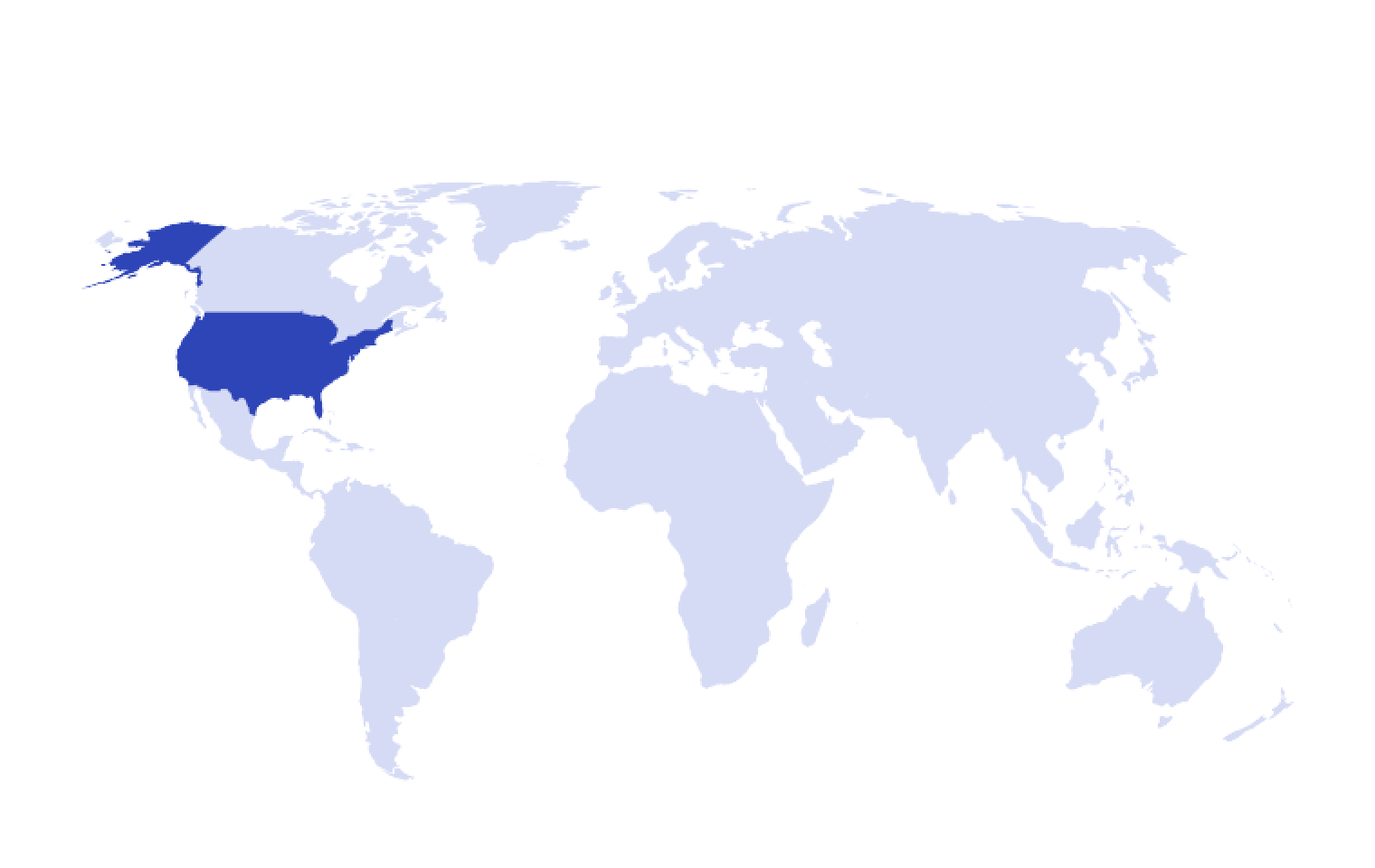
Donald Trump’s return to the White House suggests an intensification of American protectionism, with tariffs increasingly wielded to pursue other policy goals.
The world of trade is no longer one of international rules but of mercantilist confrontation.
Mr Trump’s proposed measures are already reshaping business strategies:
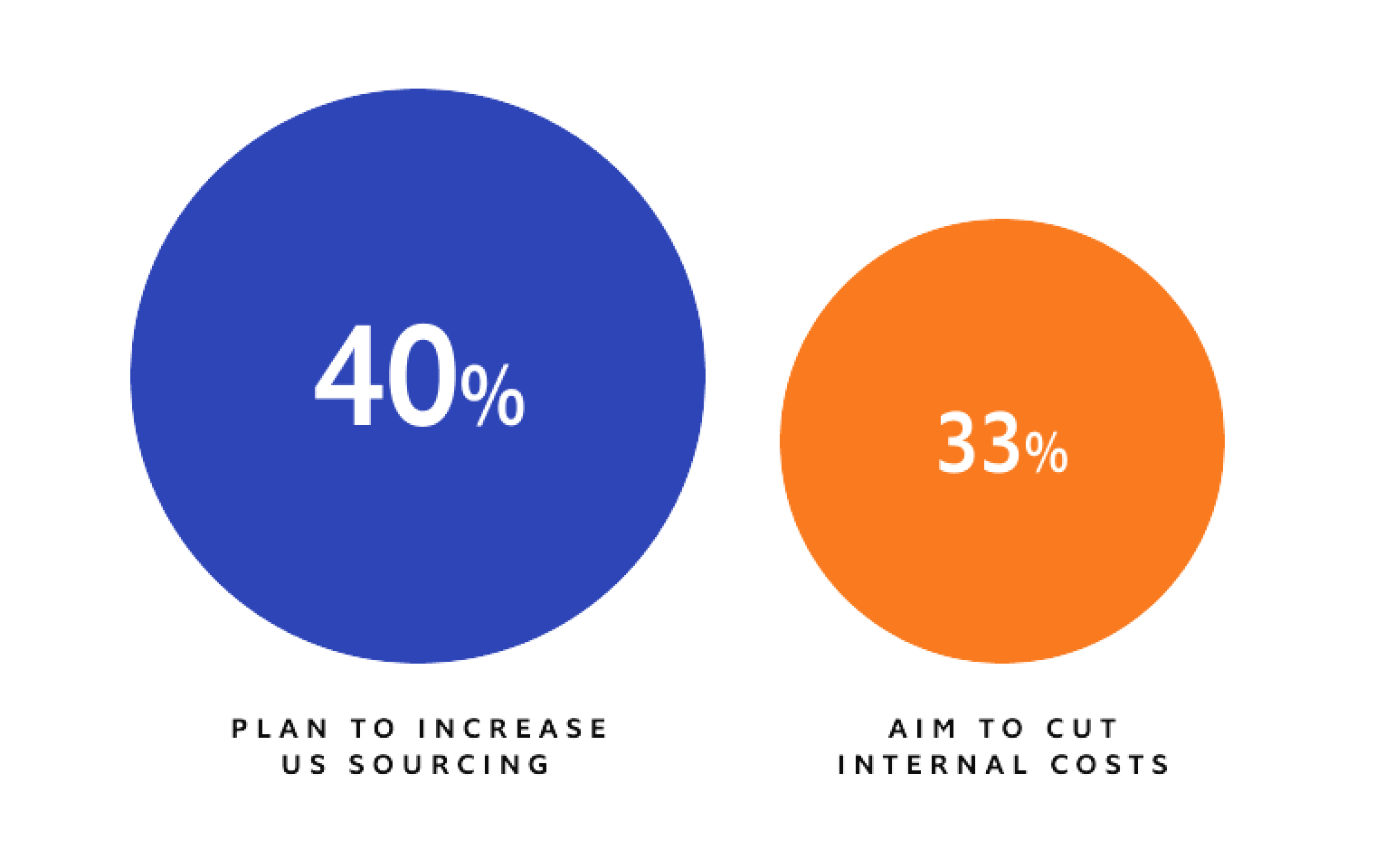
- 40% of businesses plan to increase US sourcing to avoid higher import costs
- 33% aim to cut internal costs to counter trade barriers
Retaliation from targeted countries could spark a wave of new trade restrictions and alliances, echoing the pernicious trade wars of the 1930s.
KEY FINDINGS2/7
Dual supply chains are now also a dual-way street
Supported by
Building dual supply chains – one tied to China and another entirely independent – has been increasingly common among Western firms, but they aren’t the only ones adapting.
32% of global businesses are adopting dual supply chains to hedge against region-specific risks.
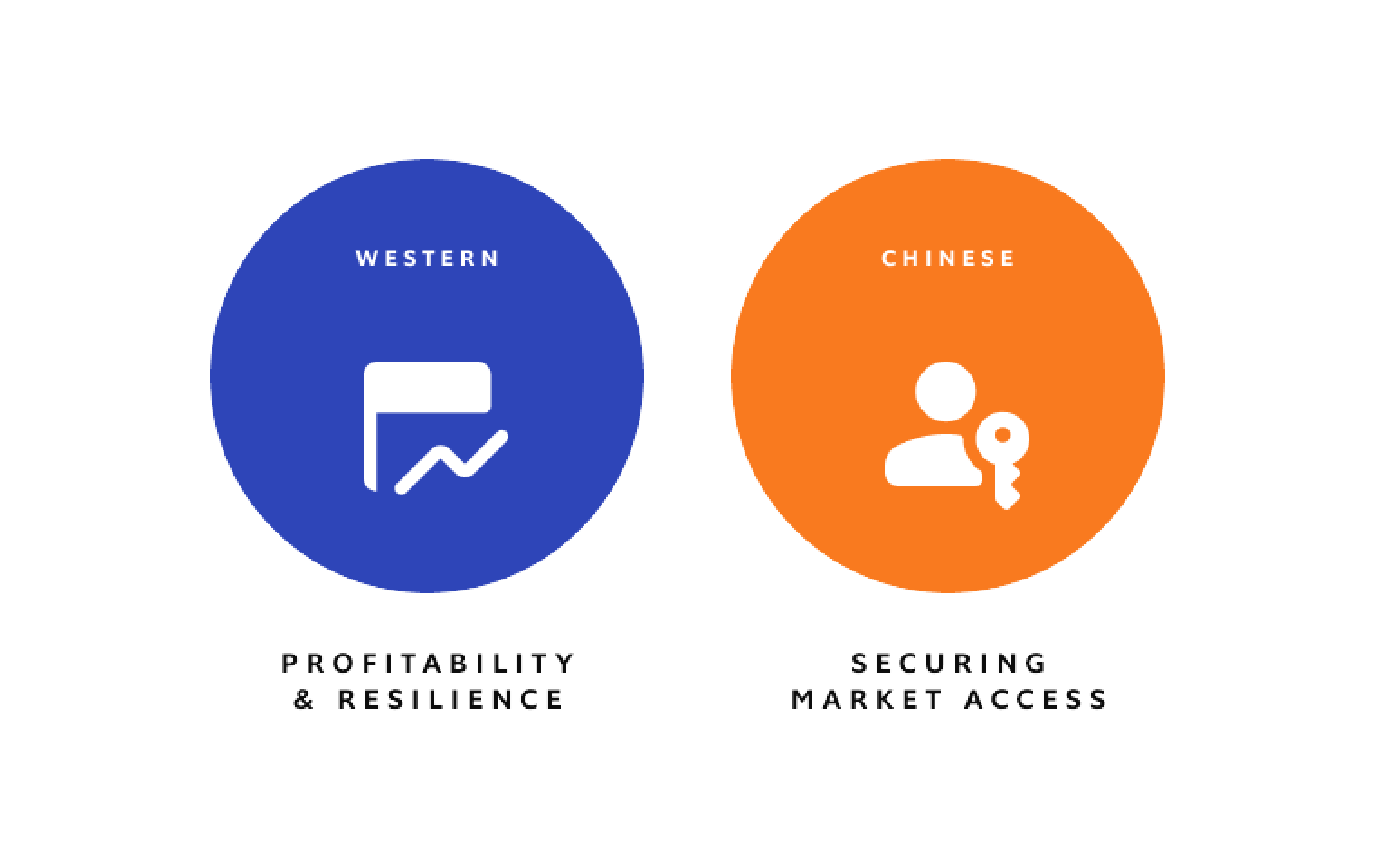
Western firms maintain dual supply chains to access China’s lucrative market and manufacturing expertise, while mitigating geopolitical risks.
Chinese firms are building parallel supply chains to overcome Western trade restrictions, while bolstering domestic operations.
The motivations differ: Western companies prioritise profitability and resilience, while Chinese firms focus on securing market access.
KEY FINDINGS3/7
Non-aligned countries emerge as key trade partners, but not without concerns
Supported by
In a divided global trade system, non-aligned countries like Mexico, Vietnam and the UAE are increasingly seen as supply-chain safeheavens.
According to 71% of executives, these countries can help firms manage risks by acting as politically insulated trade partners.
And 69% believe that neutral countries play an intermediary role, filling supply gaps created by trade conflicts between major geopolitical blocs.
However, scaling up trade with non-aligned countries poses challenges: 63% of businesses worry about regulatory inconsistencies, which could undermine the ability of neutral states to serve as reliable intermediaries.
Consequently, only 27% of firms see expanding into more stable markets as their most desirable option in dealing with geopolitical tensions.
KEY FINDINGS4/7
Friendshoring is more political than it is practical
Supported by

Relocating supply chains to politically aligned countries – ‘friendshoring’ – is the most popular strategy to reduce geopolitical risks, with 34% of firms adopting it.
Western governments, particularly in the United States, are nudging businesses toward friendlier market geographies through policies like export controls and tariffs on Chinese goods.
Determining which nations qualify as allies – and how long they will remain so – becomes an increasingly complex calculation for supply-chain planners.
Worse, whether friendshoring works remains unclear. While American firms shift production to Vietnam or Mexico to reduce dependence on China, many of these countries still rely heavily on Chinese inputs.
KEY FINDINGS5/7
Firms are looking for the sweet spot: a balance between diversification and localisation
Supported by
Nearly 46% of businesses are diversifying geographically to enter new markets and hedge against disruptions, while 42% are localising supply chains to cut transport costs and improve oversight.
Each approach has its limits – diversification can be complex and expensive, while localisation risks cutting off global opportunities.
But getting the best of both worlds works: sourcing materials from multiple regions to reduce reliance on any one geography, while shifting production closer to key markets for greater control and agility.
In a fractured world of trade, firms that combine global reach with local responsiveness are the ones most likely to thrive.
KEY FINDINGS6/7
Diversification trumps inventories: less hoarding, more hedging
Supported by
The days of stockpiling goods in sprawling warehouses are fading.
Only 20% of executives now see building inventories as the best strategy for resilience, compared with 43% who favour diversification across suppliers and regions.
The majority of firms are trimming their inventory buffers – down from 10.2 weeks in 2022 to 8.6 weeks in 2024 – while casting a wider net for suppliers to ensure flexibility when shocks come.
The key seems to be balance: leaner inventories free up some cash, while diversified suppliers reduce reliance on any single source and offer room for growth.
KEY FINDINGS7/7
More suppliers mean flexibility; fewer mean control
Supported by
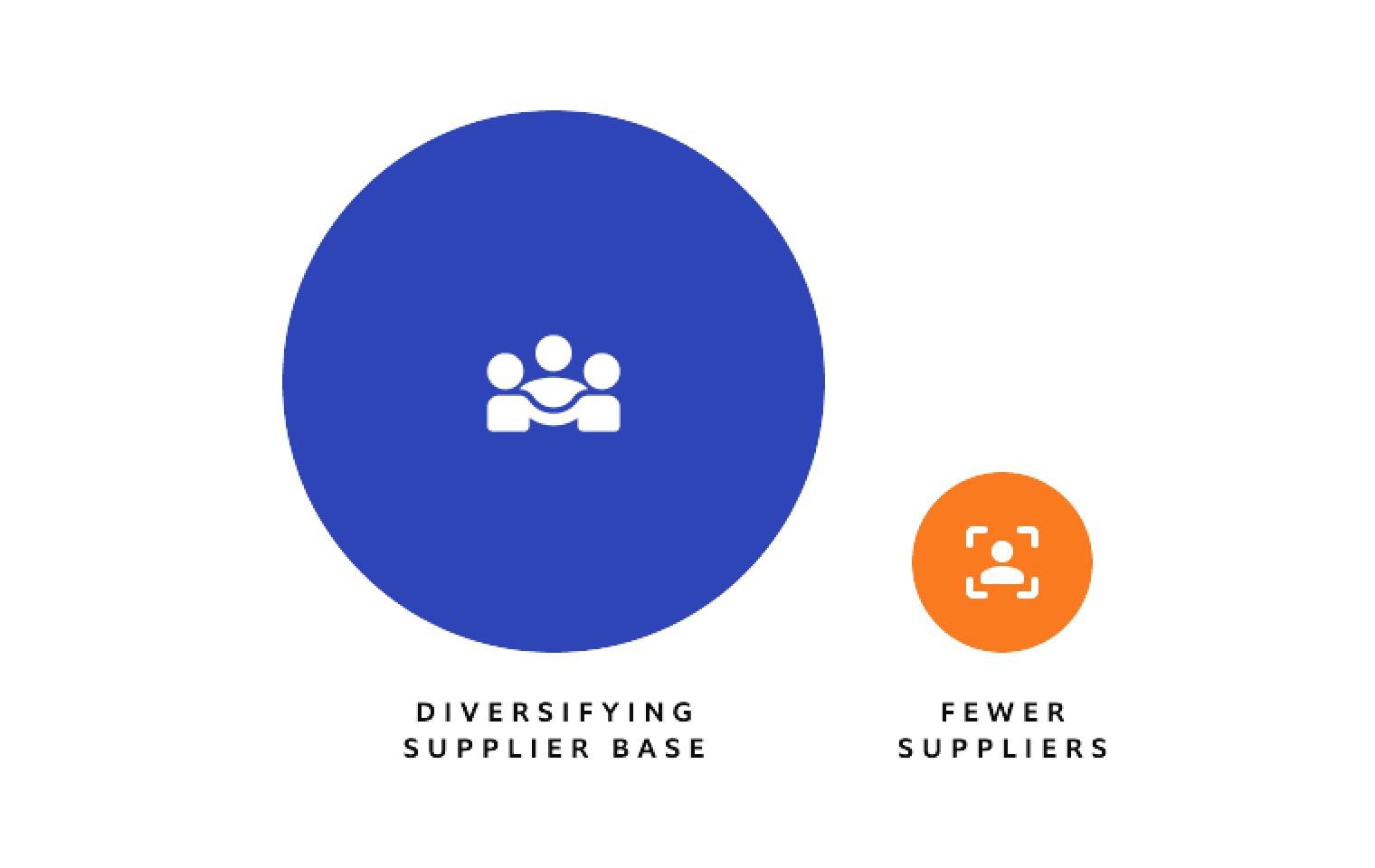
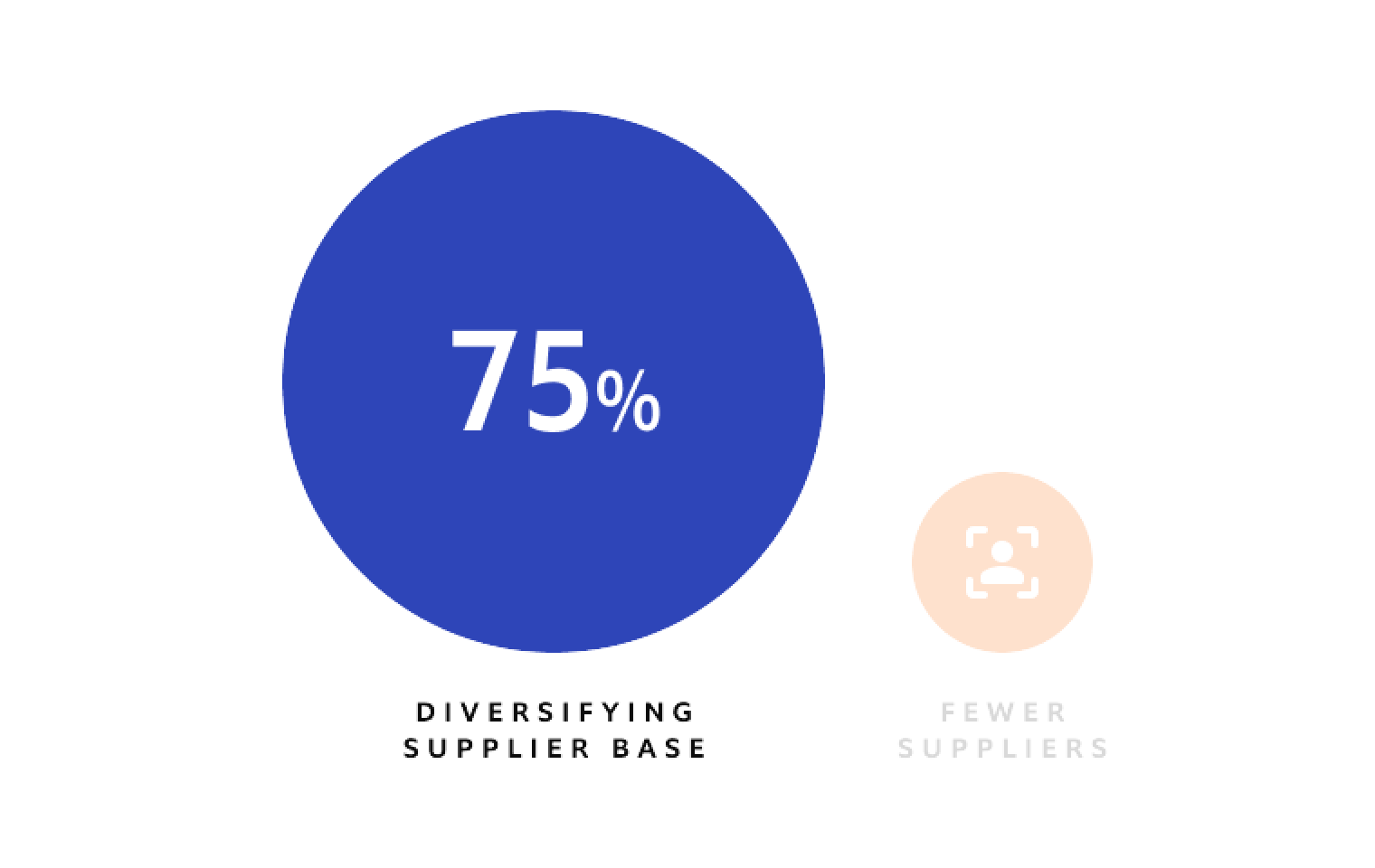
Firms often favour working with a greater number of suppliers for intermediate goods, raw materials, and services, rather than fewer.
75% of them are diversifying their supplier base, spreading risk and increasing resilience by working with more partners.
42% to improve supply-chain responsiveness
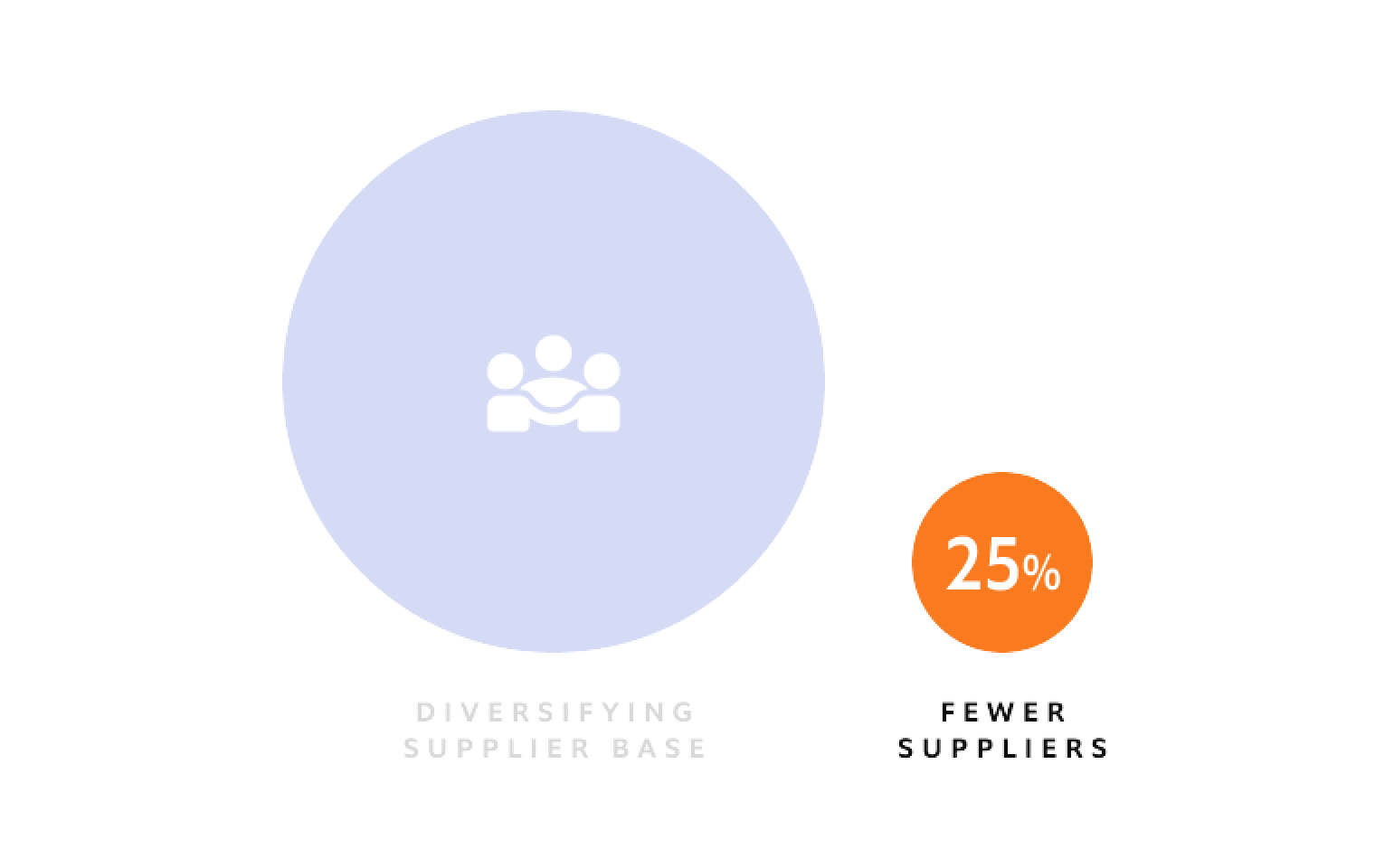
But around 25% of firms prefer to work with fewer providers as a deliberate strategy.
For these firms, the benefits of working with fewer suppliers are clear: higher quality and consistency (38%), stronger, trust-based relationships (35%), and lower administrative costs (28%).
Supplier choice is yet another calculated balance facing supply-chain strategists.
Conclusion
Over the past five years, Trade in Transition has detailed the profound changes to global commerce.
Our New Globalisation Transition Index suggests that the turbulence is set to continue, if not intensify, in the coming five. Businesses that adapt quickly and find a balance between ambition and responsiveness will be rewarded.
00